English| EUR
Suggested for you
More currencies
Choose a language
Luxembourg's food culture blends French refinement with German heartiness, creating a cuisine anchored in smoked pork, broad beans, and potato-based comfort dishes. The nation's signature plates are served year-round in traditional brasseries, where recipes passed through generations define what locals consider essential eating. This guide identifies the most popular food in Luxembourg and explains where to experience it firsthand.
Quick answer
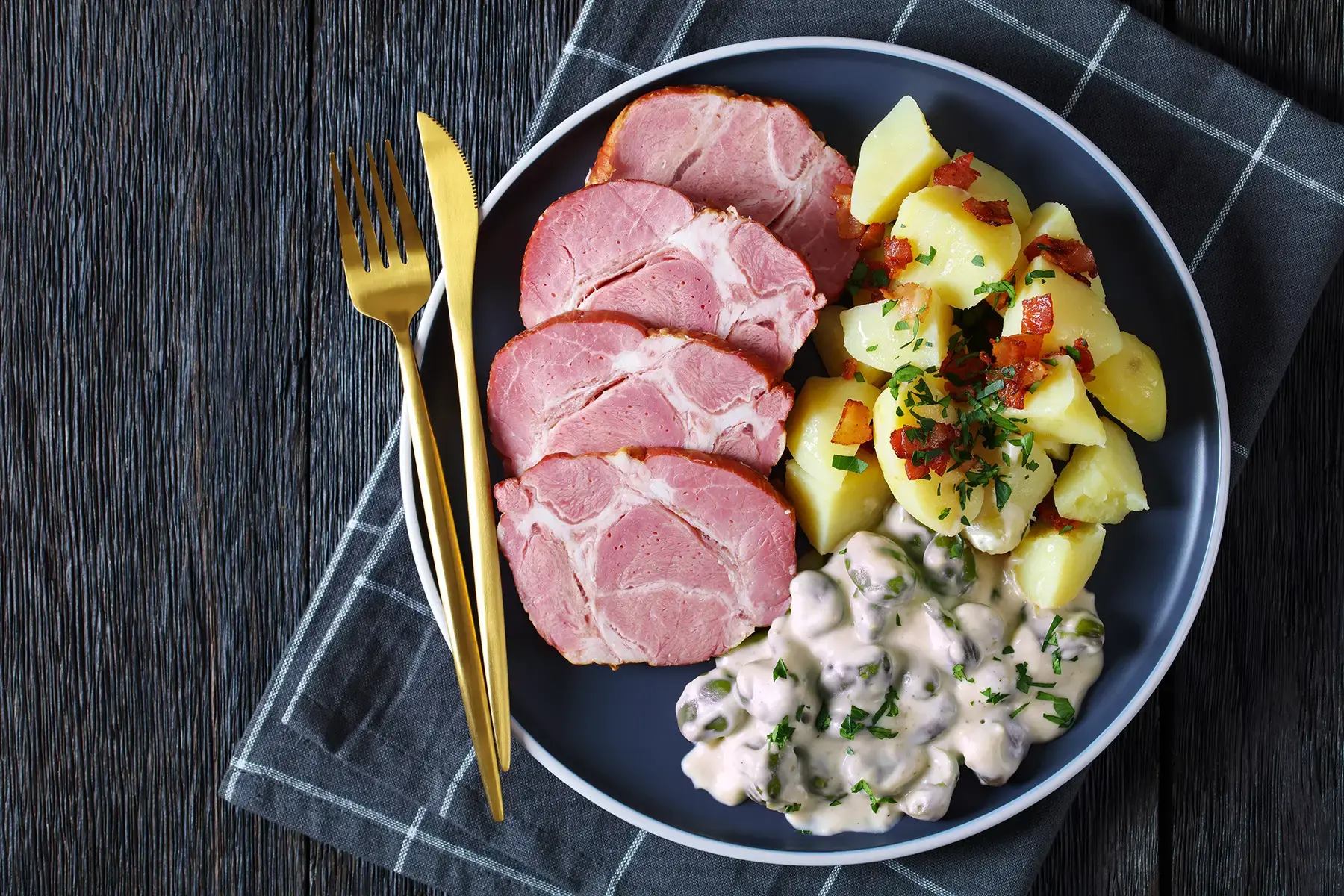
Judd mat Gaardebounen—smoked pork collar with broad beans and potatoes—is the most popular food in Luxembourg and holds official status as the national dish. The dish appears on nearly every traditional menu in the Grand Duchy, especially during autumn and winter when hearty fare defines local tables. Close contenders include Bouneschlupp (green bean soup) and Gromperekichelcher (potato fritters), both eaten as everyday staples rather than special-occasion plates.
Judd mat Gaardebounen sits at the center of Luxembourg's culinary identity. The dish pairs smoked pork collar—cured with juniper and bay—with slow-cooked broad beans, boiled potatoes, and sometimes bacon or sausage. Its preparation requires hours of simmering, a rhythm that mirrors the country's agricultural past when preserved meats sustained families through winter. The method hasn't changed in generations, and the result is a plate that tastes unmistakably Luxembourgish. Beyond Judd mat Gaardebounen, what is the most popular food in Luxembourg extends to a handful of other national staples. Bouneschlupp, a green bean soup thickened with cream and studded with potatoes and bacon, appears on lunch menus across the capital. Gromperekichelcher—shredded potato cakes fried until crisp—are sold at markets and festivals, often eaten standing with a dollop of applesauce. F'rell am Rèisleck, trout in Riesling sauce, represents the country's river traditions and French influence. Kuddelfleck, fried tripes in breadcrumb crust, divides opinion but remains a fixture in older brasseries. The dishes share common threads: pork, potatoes, and preservation techniques born from necessity. Luxembourg's position between France and Germany shaped its palate, but the cuisine developed its own character through isolation and tradition. Smoked meats, root vegetables, and dairy-heavy sauces dominate, with little room for innovation. The food is not designed to impress; it is designed to sustain. Restaurants specializing in these dishes operate throughout Luxembourg City, particularly in the Grund and Clausen districts where traditional cooking persists. Um Dierfgen, located at 6 Côte d'Eich, serves the full canon of Luxembourgish cuisine and opens daily from 11:30, with no entrance fee required since it functions as a public restaurant rather than a ticketed venue. Reservations are recommended during lunch and dinner windows, as demand for authentic national dishes remains consistent year-round. The best time to arrive falls between 11:30 and 21:00, ensuring full menu availability and reasonable wait times.
“The method hasn't changed in generations, and the result is a plate that tastes unmistakably Luxembourgish.”
To experience Luxembourg's national dishes, visitors should prioritize locations that focus on traditional preparation methods. While city center options are plentiful, selecting venues known for authentic local menus ensures a representative culinary experience.
restaurant
Located at 6 Côte d'Eich, this venue is a popular spot for national dishes and offers a dedicated setting for traditional Luxembourgish cuisine.
market
This central square frequently hosts local markets where vendors sell regional sausages and artisanal cheeses, providing a casual alternative to restaurant dining.
street
The streets surrounding this main artery feature various bistros and bakeries where visitors can find quick bites or sit-down meals away from the primary tourist thoroughfares.
The restaurant serving traditional Luxembourgish cuisine operates daily throughout the week. Visitors can plan their visit according to the following schedule.
Securing a table for popular Luxembourgish dishes is easiest by planning your visit within the recommended arrival window of 11:30–21:00. Arriving early in this period helps avoid the peak demand typical of this sought-after venue.
Mild, 15°C to 20°C
Ideal weather for walking to the venue before dining.
Cool, 10°C to 15°C
Lower tourist volume makes finding a table more predictable.
—
Arriving at 11:30 ensures immediate seating before the local rush.
—
High demand necessitates arriving near the start of the 11:30–21:00 window.
Verdict: Tuesday to Thursday, arriving at 11:30, during the months of May or October offers the most consistent access to seating.
Establishments serving traditional Luxembourgish cuisine function as public restaurants rather than ticketed venues. Consequently, there are no admission or entry fees required to access these dining spaces.
Verdict: Adults pay 0 EUR for entry, as costs are limited to the food and beverages ordered from the menu.
The venue is located in the heart of Luxembourg City at 6 Côte d'Eich, 1450 Luxembourg City, Luxembourg. It is centrally positioned for visitors exploring the historic district and is most easily accessed by public bus or on foot.
Lines 2, 3, 4, 10, or 11 to Badanstalt stop
From the Place Guillaume II via Rue du Fossé
Parking at Parking Knuedler or Parking Théâtre
Use the public bus network to reach the Badanstalt stop, which places you a short walk from the entrance. Arriving between 11:30 and 21:00 helps ensure you secure a table during peak dining periods.
Everything you need to know about what is the most popular food in luxembourg
Judd mat Gaardebounen, a dish featuring smoked pork collar with broad beans, is widely considered the national dish when asking what is the most popular food in Luxembourg. Many visitors also enjoy Gromperekichelcher, which are spiced potato fritters served at markets and cafes. Exploring these flavors is a primary goal for those researching what is the most popular food in Luxembourg to understand the local culture. You can find traditional Luxembourgish cuisine by visiting dedicated local establishments such as Um Dierfgen, which serves these hearty recipes daily. Understanding what is the most popular food in Luxembourg often leads travelers to seek out these authentic dining experiences in the city center. The establishment at 6 Côte d'Eich is open until 22:00 most nights, offering a reliable window to sample these flavors, and there is no entry fee to dine at this public restaurant. If you are wondering what is the most popular food in Luxembourg to share with children, potato fritters are a perennial favorite that appeals to all ages at local eateries.